
In this romance-thriller, a rare condition with a hidden “gift” lures a talented musician down a lucrative criminal path
Take Good Will Hunting and Darren Aronofsky’s 2025 crime caper Caught Stealing, and you have Tuner, this progressively nail-bitingly tense thriller-romance from director Daniel Roher that sees a talented but cash-poor musician’s entry in the criminal underworld. As it does, Tuner raises pertinent questions surrounding class and crime in late-capitalist America. It’s a fun and welcome addition to a growing list of productions in which “good-guy” protagonists turn to crime in order to make ends meet—from AMC’s Breaking Bad of the mid-noughties to 2022’s Emily the Criminal.
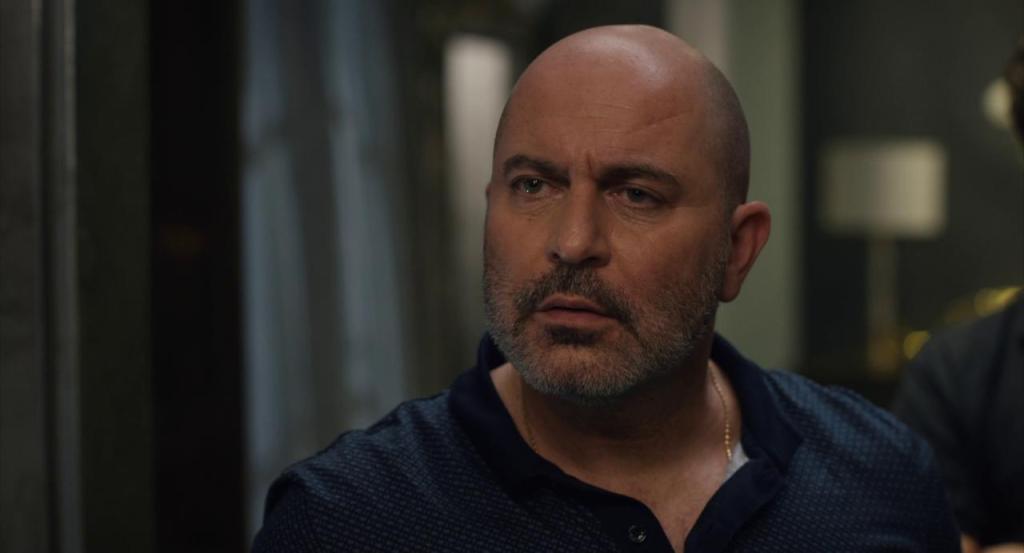
Tuner is perhaps unique in that it alone harks back to the category’s genesis, Dickens’ Oliver Twist, with the innocent and relatable Niki (Leo Woodall) serving as a modern-day, adult Oliver, while the charming crime boss Uri (Lior Raz), whom the former comes to work for, mirrors pick-pocketing mastermind Fagin.
Niki is a shy but gifted musician-turned-professional piano tuner suffering from a rare condition called hyperacusis, an extreme sensitivity to sound that forces him to near-permanently wear specialised earbuds to muffle the sounds of daily life. As if his day-to-day struggles weren’t enough to deal with—car horns and yapping dogs, while a nuisance for rest of the world, pose risk of physical harm to those with hyperacusis—Niki’s condition prevents him from pursuing his one and only passion: playing the piano.
For the unassuming Niki, his inability to play the piano (one that is strangely at odds with his profession) is a cross he has learnt to bear. For Niki’s music mentor and father figure, the kind and avuncular Harry (Dustin Hoffman), it makes him a prodigy with clipped wings whose job working hands-on with very thing he loves but cannot fully embrace is a cruel irony.
And the work itself is hardly any less cruel: a demeaning and unsatisfying job, it involves tuning the statement pianos that lie unused in the homes of wealthy elites who all too often attempt to fold menial tasks, such as fixing leaky toilets, into his visits.
Working late one evening in the foyer of opulent suburban home, however, the work presents itself with an unlikely opportunity. Loud drilling noises emanating from above prevent him concentrating. Investigating, Niki stumbles across a group of men attempting to break into the property’s safe.
The cool and smooth-talking Uri, leader of the heist, wryly suggests Niki had better somehow open up the safe, or else. Fortunately for Niki, it just so happens that he has a trick up his sleeve. Days prior, when Harry’s failing memory meant he couldn’t recall the combination for his personal safe, Niki offered up his services. One YouTube rabbit hole later, he was able to add the following skill to resume: breaking into safes by turning their dials and, using his acute hearing abilities, carefully listening to the ticks within to gauge their combination.
Strongarmed, but apparently keen to put his newfound ability to use, Niki cracks the safe, and the shrewd Uri sees the business potential before him. Masquerading as home security technicians, Uri and his men run a nifty business skimming valuable items from the vacant properties of wealthy New Yorkers—never stealing enough to rouse suspicion of their more-money-than-sense proprietors. With Niki in the fold, Uri could streamline operations by slashing the time needed to break into the safes and doing away with the need for cumbersome power tools. Niki is left with a pat on the back, along with Uri’s business card.
For Niki himself, fed up with tuning the dormant pianos of oblivious New Yorkers, the opportunity appeals, but not enough to lure him. However, push comes to shove when Harry tragically suffers a heart attack and can’t afford to pay off the eye-wateringly high medical bills that come with it.
Determined to pay them off, Niki takes on work with Uri and his two partners—the hilarious, reel-addicted and snack-loving Benny (Nissan Sakira), who is the last person you’d expect to be involved in such operation, and his more competent counterpart Yanni (Gil Cohen). With things well under way, Niki steadily begins paying off Harry’s medical debts—raising the suspicions of his wife Marla (Tovah Feldshuh) who frets over Niki’s sudden influxes of cash.

Meanwhile, Niki finds himself falling for Ruthie (Havana Rose Liu), an ultra-competitive aspiring composer he meets one day tuning a piano at the music conservatory where she studies. Veiled sparks fly, and Ruthie is quietly wooed by Niki’s next-level musical flare (something she gauges by playfully testing his uncanny ability to identify piano chords instantaneously and at speed).
Later, when Ruthie’s personal piano is flooded with water from a burst pipe, she reaches out to Niki and begs for help. Niki heads over and the pair grow close.
But becoming intimate will be no walk in the park for Niki. As the pair become attached, he is forced to confront the walls he has erected to protect himself, impenetrable walls that shield the pain of both his disability and of having never fulfilled his passion. This is cleverly hinted at when the pair tentatively lean in for a kiss one evening: just as they’re about to make contact, Ruthie’s fire alarm explodes into action, sending Niki into an auditory meltdown.
Things come to a head when worlds collide and Niki’s criminal exploits become increasingly high-stakes. Interweaving it all—Niki’s job, his dangerous side hustle, his growing relationship with Ruthie and Harry’s ill health—Roher slowly dials up the tension like a master conductor, gradually taking Tuner from its comedy-driven beginnings to a fully fledged thriller. Things reach a fever pitch when the lives of Niki and Ruthie are endangered, and the former’s condition is used against him as a weapon in scenes you can scarcely watch between fingers.
Tuner is a wildly far-fetched caper that grows ever more fabulous as it advances, but is grounded by the stellar performances of Woodall, Lui and Raz, whose work coaxes us to embrace it all. And if the world has taught us anything of late, it’s that anything goes—especially if you’re loaded. Why should the rich have all the fun?
On a less-fun note, it has to be acknowledged that Tuner is weighed down by Roher’s romanticisation of the gifted-yet-tortured-male-artist trope embodied in Niki. Indeed there’s a nagging sense in the film that Niki’s innate mastery of music—one we assume is there even if he doesn’t play anymore (a fact that only adds to the tragedy of his status as an unacknowledged prodigy)—is accentuated by the seemingly appropriate toiling Ruthie must undergo in order to become a successful female composer.
The trope itself is reinforced by the assumption maintained throughout the film that Niki would—if only he could!—play Ruthie’s composition better than her. True, in a heated exchange between the pair, Niki himself verbalises this, suggesting we can expect an interesting look at questions surrounding the pressures on people with extreme talents in potentially gendered ways. But Niki’s remark is left unaddressed, leading us to believe that the superior musical flair he possesses is the product of his being a man.
The film’s rather abrupt conclusion does little to rectify this, and inevitably the story finishes on an unfortunate note that echoes a long tradition of male artists stealing from the works of their unacknowledged female counterparts. It’s a disappointing conclusion, but it doesn’t prevent Tuner from being an energising movie well worth a watch.


Leave a Reply