
Lukas Dhont’s 2022 Grand Prix winner grows ever more relevant with each year — and is, despite its tough subject matter, utterly life-affirming
Pourquoi t’étais pas là… ?
These are the shattering words — “Why weren’t you there?” — that loom large over the bulk of Lukas Dhont’s often overwhelmingly touching 2022 film, Close, and remain with you days after viewing. They’re uttered by Rémi (Gustav de Waele) to best friend and neighbour Léo (Eden Dambrine) when the latter fails to meet him for their morning bike ride to school at the intersection that divides their homes in rural French-speaking Belgium. Simple though they are, his words signal the end of their once unbreakable and uniquely intimate friendship which, in the harsh, gossipy milieu of the middle school they now attend is ostensibly perceived as gay — something the more self-conscious Léo, keen to gel into his new environment, feels compelled to distance himself from.
And yet, as the film’s first part goes lengths to demonstrate, set in the summer preceding their start at the new school, their relationship is neither definably straight nor queer; their bond is a reflection of the seemingly unbreakable links typical of both young boys and — perhaps more rarely — inchoate queer love. (Elaborating on their relationship, Dhont has explained that despite initially intending to base Close around the lives of two gay adolescents, his research surrounding the lives of all young boys and their struggles today inspired him to keep the sexuality of Léo and Rémi open-ended).
Either way, the relationship between Léo and Rémi is unsexualised but nonetheless intimate and tactile and achingly innocent — the type typically shared between girls. They share beds together during sleepovers, often almost spooning. They support one another’s creative endeavours (Rémi is a talented clarinet player). They frolic freely through the flower fields of Léo’s family farm, where he often helps. And they enjoy private games in the disused bunker-style building near their homes — an oasis in which the imagined sound of encroaching footsteps jolt the pair into a mock defence-cum-celebration of their unique friendship.
It is, in many ways, as though Léo and Rémi speak a secret language of their own. It figures then that the school they eventually join — removed from the quiet sanctuary of the countryside — is run in Dutch (teachers, on their first day, explicitly instruct that children must communicate in the language regardless of the one they grew up with). The fragile and undefinable nature of childhood friendships is no match for the rigorously categorising and tribal nature of school, one Léo — affronted by questions regarding his potentially “gay” relationship with Rémi — quickly conforms to.
Learning the codes of school — the ones we carry with us well into adulthood — Léo takes to rebuffing Rémi’s platonic displays of affection on the playground, expands his social circle and joins the boy’s ice hockey team in a clear sign of his allegiance to the gender-conforming customs of adolescence. His former best friend, meanwhile, is relegated to a life on the periphery to become a ghost of his previous self. It’s not long before their friendship has all but disintegrated — the tragedy of which Dhont beautifully drives home when, in the winter months, we’re shown Léo toiling in the cold, dark land of his family farm, now stripped bare of flowers sold coldly for profit in the violent world of an adult life he is hurtling towards.
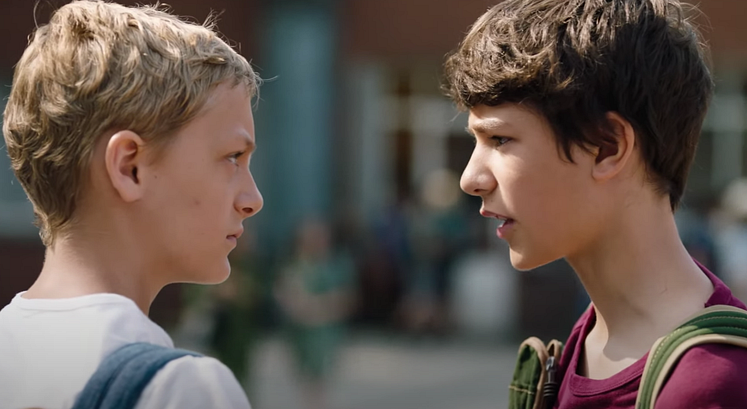
None of this, however, is treated with the melodrama typical of “young adult” Netflix productions. Dhont is deceptively, refreshingly unobtrusive in his directing style, capturing both the rare beauty of Léo and Rémi’s halcyon summer through to its painful undoing with unhurried but rewarding scenes in which little, on the surface, appears to take place but which are in fact teeming with life. Equally unfussy is the film’s script — from Dhont and frequent creative partner Angelo Tijssens, whom he worked with previously on 2018’s Girl. Lingering and shrewdly economical, it is effortlessly brought to life by the complex yet understated performances of not only Dambrine and De Waele — exceptionally strong given their young ages — but those too of Léa Drucker, Kevin Janssens and the late Émilie Dequenne, who respectively play Léo’s mother and Rémi’s parents (Dequenne sadly died of cancer earlier this year).
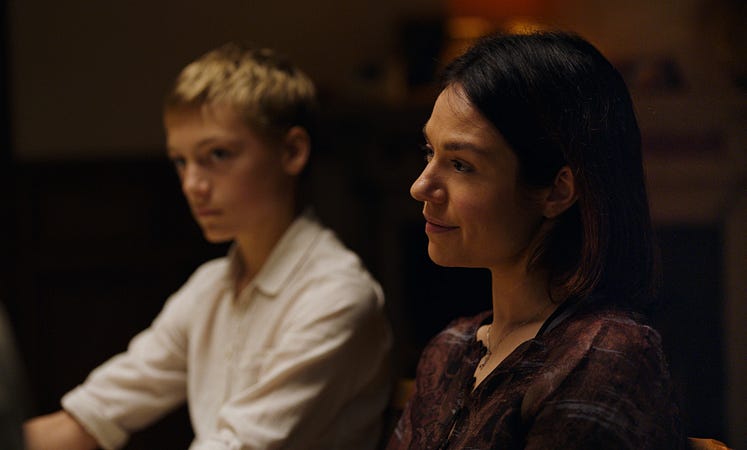
So convincing are the performances that we’re scarcely able to avoid sharing their pain when tragedy unexpectedly strikes the families of both Léo and Rémi, an interfamilial trauma that emanates from the screen. Léo at this point takes the limelight and for much of the film serves as an exploration of one boy’s guilt at having rejected his best friend — a remorse he instinctively bottles away by donning the facade of an unperturbed, macho nonchalance. Yet his veneer of unbotheredness is inevitably pierced by moments of profound realisation — spurred on when he grows closer to Rémi’s kind and nurturing mother in a relationship that slowly coaxes out the truth of his actions.
Naturally, many parallels can be drawn between Close and Netflix’s hit series Adolescence of this year, the single-take phenomenon lauded for its depiction of how toxic masculinity is bred amongst young boys through nefarious content on smartphones and online gamer communities. Yet where the Stephen Graham-produced series is a nail-biting encyclopedic journey through the various procedures and layers involved in the wake of a child’s act of femicide, Close showcases how the beginnings of a toxic manhood can manifest in less obviously horrific but nonetheless devastating ways — such as in the simple rejection of a friend owing to peer pressure.
As if to score this, smartphones are almost wholly absent in the film, while in only one scene we witness Léo playing a violent first-person shooter game of some variety with a male friend in what functions as a sad counterpoint to his former pastime of listening with admiration to Rémi practice the clarinet earlier in the film — one of a handful of moments of gentle creativity the pair shared together. And this is perhaps the crux of things: While Adolescence excelled in investigating the too-little-too-late aftermath of the online indoctrination of teens, Dhont digs deep to examine the invisible social forces at play that weed out love (platonic or otherwise) between boys — that brutally harvest the flowers of creativity, joy and intimacy we take for granted in youth and instil the cruel notion that such concepts cannot exist between real men. (After all, how many of the flowers harvested from Léo’s family farm will go on to be purchased for men?).
It’s tempting to doubt how in 2022, as much as in 2025, it can be that such starkly bifurcated notions of “boy” and “girl” and “gay” and “straight” can exist and continue to be perpetuated in schools today. Yet vital works like Close and Adolescence prove that, in the digital age, young identities are being forced into ever-more rigid gender binaries that undermine perilous claims that we live in more “progressive” times.
Through it all, Close handles its often dark subject matter with remarkable subtlety, eschewing cliche to inhabit a unique space between pain and love, guilt and growth — all to end with something hopeful, something quietly urgent but utterly life-affirming.
This article was first published on the Medium publication Counter Arts on 23 December 2025
 Home
Home 
Leave a comment