
Wim Wenders’ love letter to living presently is a moving celebration of the things and places that truly bind us — but is let down by a simplistic ending
I’ll confess that I went into Wim Wenders’ Perfect Days — the Palme d’Or winner that follows the mindful, minimalist daily routine of Tokyo-based toilet cleaner Hirayama (Kōji Yakusho) — with a nagging sense of doubt. Wary of the rather simplistic portrayal of happiness depicted in the film’s promotional still — the image of a beatific Hirayama bathed in sunlight — I feared it would force me to endure a rather smug portrayal of sanctimonious contentment.
Yet, equally conscious of Wenders’ resistance to cliche — being of that particular brand of new wave European that appeals to American viewers — I was compelled to watch this film. And this paid off. Perfect Days is no quaint, unified depiction of how to live presently and eschew life’s vices in the process. Hirayama, though contented, is very much human and is very much susceptible to the full gamut of daily emotions we mortals experience.
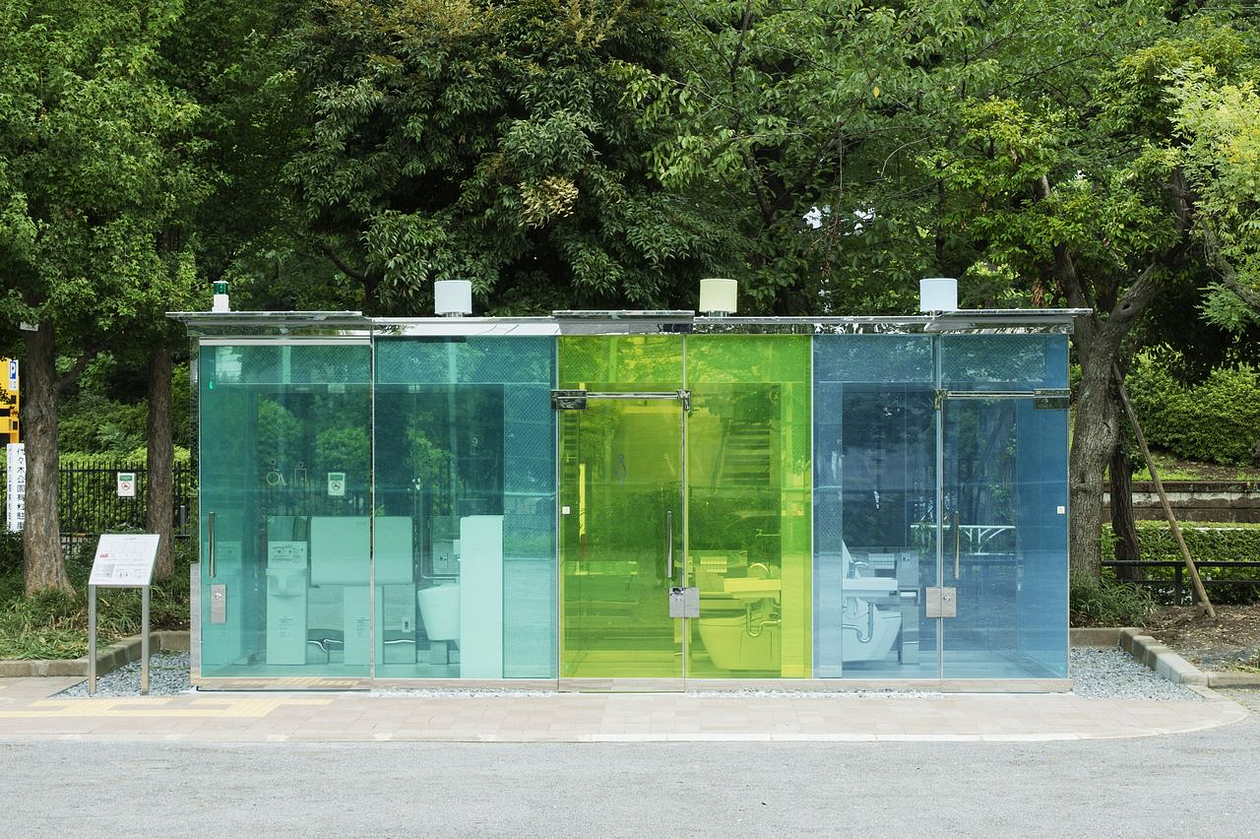
This, we’re given a glimpse of early in the film. Wenders revealed that his inspiration for the film came from the idea of an alcoholic, suicidal businessmen who trades in the vicious corporate hustle for a simpler life doing honest work and appreciating the beauty in the immediate world around him in the process. Not long into the film, as Hirayama cleans his first site of the day — one of the many iconic “Tokyo Toilets” found dotted around the affluent Shibuya district — he comes across a boozed-out Tokyo businessman slumped against the outdoor wall. Shown so early on in the film, the man is a clear token of the previous Hirayama — one he is careful not to look at for too long.
It’s a clear sign of what lives in the corners of Hirayama’s mind, too, and what motivates him to lead this humbler, more streamlined existence lived to a rigid but comforting schedule. Every day, Hirayama wakes to the sound of a local sweeping the streets beneath his home. No snooze button in sight, he gets up calmly and resolutely, folds away his sleeping futon and blanket and places it in the corner of his basic but oddly appealing living room. Once ready for work, he grabs a canned coffee from the vending machine outside of his apartment and drives off in his little blue van to begin his day driving from public toilet to public toilet, fastidiously cleaning the functions and facilities of each — right down to the automatic bidet wands that emerge gracefully from the behind the loo.
In transit, Hirayama contents himself by listening to the greats of alternative rock — think Patti Smith, Van Morisson and Lou Reed, whose “Perfect Day” naturally makes an appearance and is later heard again in a piano motif. On the job, when not engrossed in his cleaning duties, Hirayama enjoys the natural surroundings his job affords him — eating his lunch under the shelter of the trees, taking photos of the light that trickles through them on his analog camera, passing amiable nods to the people around him going about their lives (a habit one office worker, a woman who eats her lunch at park like at the same time as him every day, finds bizarre).
Outside of work, Hirayama turns his attention to simple but mindful and fulfilling activities. He keeps a small nursery of plants at home, develops and observes the photos from his film camera, placidly carries out chores, and dines out at a select handful of local haunts — where it’s a running joke that the glass of iced water staff serve him without being prompted is a substitute for the booze they no doubt once provided him with. Back home, once in bed, he studiously reads mostly twentieth-century American literature.
Throughout, Hirayama remains calm, curious and — crucially — quiet, opting for his trademark nods over verbal interactions with those he encounters. Unlike the flashy and grandiose Sky Tree tower — Tokyo’s technicolour skyscraper dominating over the city like something arrived from outer space — Hirayama lives humbly, resides in the shadows of others (and indeed the Sky Tree tower itself).
Central to this way of life is Hirayama’s near mutism, which is in turn central to his appeal. In an always-on, industrious world — one that pings and pops, hums and roars — the pressure to always say something, to match the sounds around us, is all too real. “Brain rot” is the language of the young, digital generation that speaks in code, a babble of empty quips and fillers adopted from social media. It is the language of Hirayama’s younger cleaning colleague Takashi (Tokio Emoto), who is, in many ways, his antithesis. Often arriving late and rushing through the work he does once there, Takashi is boisterous, clumsy and wholly led by “vibes” — endlessly ranking people, things and interactions with others out of ten as in the trend today.
One day, Hirayama and Takashi are busy cleaning a trio of glass toilets situated in Yoyogi Fukamachi Mini Park (whose coloured glass walls turn opaque when in use) when Takashi’s trendy and aloof love interest Aya (Aoi Yamada) turns up suddenly. Keen to impress her, Takashi begs Hirayama to finish work early so he can drive Aya to work (a girls bar) in his van. Acquiescing, Hirayama sits in the back of his van as Takashi drives and fills the silence with mostly nonsensical chatter. This mostly washes over the cool, uninterested Aya who, clocking Hirayama’s music collection, asks Hirayama if she can play his Patti Smith tape.
Given the clear, Aya goes to put the tape on upside down, which Hirayama is quick to correct. As it plays, and Smith’s hypnotic “Redondo Beach” lyrics spill out into the car, she declares it her favourite way to listen to music. A small but perceptible awakening takes place within Aya, which touches Hirayama and kickstarts an unspoken but powerful connection between the unlikely pair. This, of course, is lost on the unsuspecting Takashi — who nonetheless recognises Aya’s love for the music and slips the Smith cassette into Aya’s purse when they eventually park up.
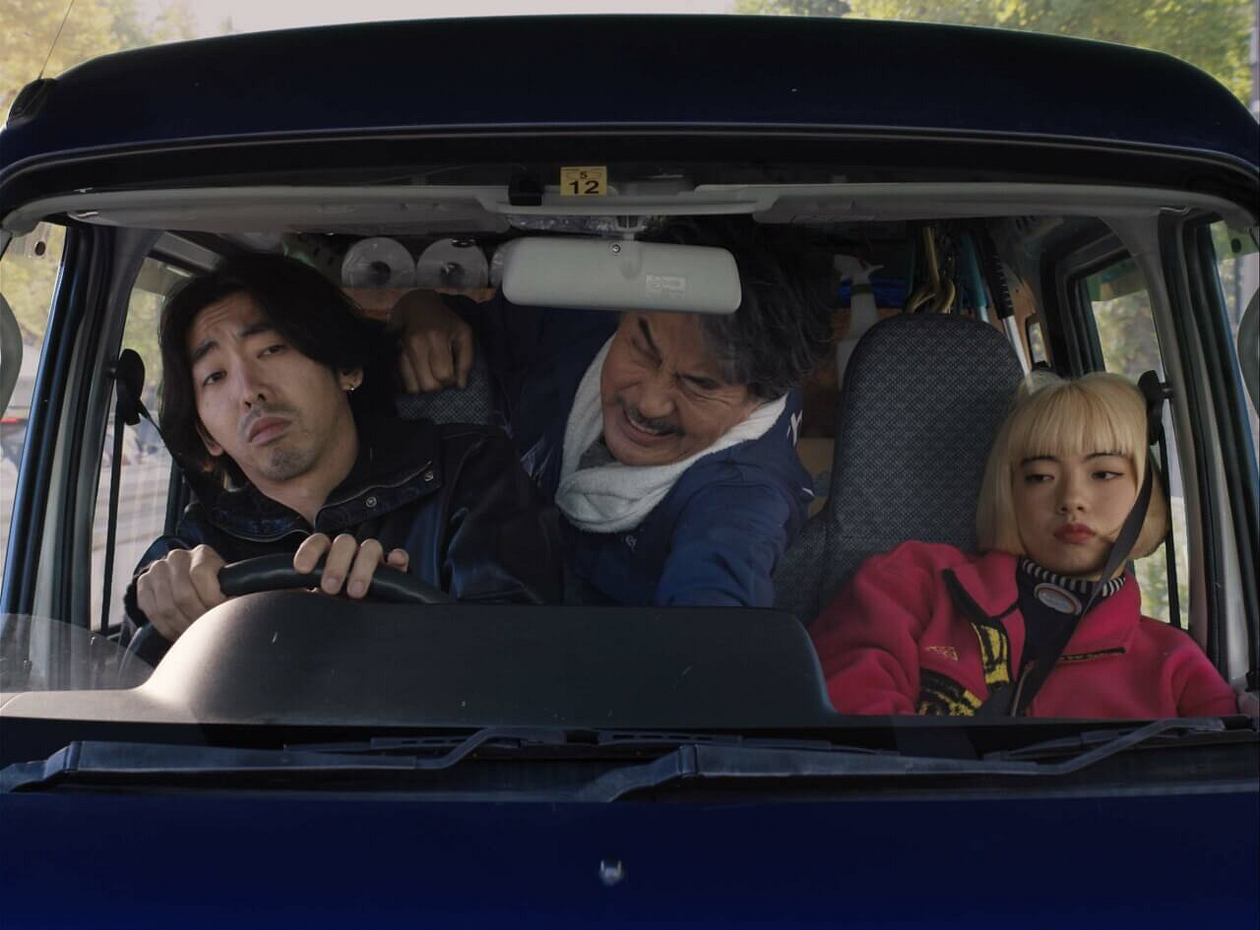
The scenario is repeated later when Hirayama’s kind but rather lost young niece, Niko (Arisa Nakano), arrives unexpectedly at his doorstep one night having fled the home of Hirayama’s successful and judging sister (from whom, like the rest of his family, he is estranged). Seated in his van having asked to accompany him on his job, Niko goes to play a Van Morisson tape. As she does, she mimic’s Aya’s mistake by putting in the cassette tape upside down — which Hirayama again promptly corrects.
Though subtle, the faux pas made by both Aya and Niko, along with Hirayama’s correction, together ignite a tangible, real connection between not just two people but two generations — one perpetuated through physical objects like cassette tapes. Similarly, Niko reveals later that she has the same analog camera as her uncle, a moment that will, once again, further unite the pair.
These are just a few of the instances in Perfect Days in which real objects like cassette tapes and cameras become conduits for genuine relationships that surpass anything phones and other digital devices can provide — despite their ability to provide a plethora of flashy functions.
Places — from restaurants and parks to public facilities such as toilets and washrooms — likewise play a crucial role in facilitating these relationships. Hirayama bonds with the bookseller at his local bookstore, for instance, a small but rewarding relationship mediated through books. He plays an extended game of naughts-and-crosses with a stranger after finding an empty grid sketched onto a piece of paper slotted into the crevice of a public toilet. He socialises with the servers and chefs that provide him with food at the local restaurants he visits, maintaining an especially close bond with the proprietor of one, Mama (Sayuri Ishikawa) — who is, we suspect, the object of his affection.
It is happiness in the knowledge that things must come to an end and need not go further, like listening to a cassette tape from beginning to end without the auto-shuffling algorithms of Spotify interrupting (or indeed forcing us to want more once it finishes by playing “something similar”). Through his encounters, Hirayama maintains often semi-anonymous, deeply gratifying relationships that are — unlike the forced and dizzyingly endless relationships we foster online today — finite.

And yet are such interactions alone enough to form the basis of social contentment? Is to exist on the opposite end of modern life’s scale of chaos to expose oneself to the same issues, only mirror-imaged? Indeed, the solitariness Hirayama’s existence ultimately necessitates becomes increasingly unavoidable the more we watch. Despite the small but meaningful relationships he maintains with the people in his life, they are, ultimately, transactional in nature, tokens of a life lived mostly in the shadows. Only at night, reading in bed, do we perceive this lack as he fidgets distractedly on his minimalist futon — a sense of lack, of something missing in Hirayama’s life seeming suddenly to rise to the surface and which, as he sleeps, we see translated into the rather eerie, feverish vignettes that form his dreams.
Herein lies the fallacy of Hirayama’s mode de vie. By removing himself from the plane of life most exist in — with his minimal verbal communication with others lying at its core — Hirayama denies what it is to be a living, breathing, interacting human existing in the light of the day. Moreover, how different can his grounded but peripheral existence truly be from his former life as a no-doubt lonely corporate lackey if it means existing mostly in solitude, appealing though it might seem? Just as he physically lives ever in the shadow of Tokyo’s garish Sky Tree, Hirayama is stalked by the shadow of his high-falutin former life — hence, perhaps, his rather tentative glances at the structure.
The film’s titular “perfect days,” then, aren’t those lived by Hirayama; instead, the concept of a perfect day exists as a mirage in the eyes of one such as himself, one determined to find contentment of the confines of solitude. At the heart of Lou Reed’s “Perfect Day” is a curious ambiguity as to whether Reed longs for the person he shared these days with — a love interest — or, like Hiyarama, the safety, rhythm and purity those days offered him. In other words: what, precisely, keeps Reed “hanging on”? A lover and the times they shared together, or the simple perfection of those days — days he mentions he was merely “glad” to have spent with someone? It’s this very tension that gives the song its melancholic quality and which here hints at Hirayama’s vain pursuit of perfectionism.
As Perfect Days progresses, the limitations of Hirayama’s silent, solitary life are exposed by the people who inevitably exist within it — people who will push the idealised and structured days he yearns for further from his reach. Try as he might, Hirayama cannot live apart from the exigencies and yearnings that come with life. When, for instance, Takashi exploits his goodwill by rinsing him of the cash he needs for his endless project to woo Aya, Hirayama is later forced to sell a valuable cassette tape to pay for petrol after his van breaks down — betraying a level of attachment to possessions in a way that contradicts his identity as a seemingly liberated soul free from consumerist desire. Or, when Takashi quits unexpectedly one day, Hirayama is saddled with a gruelling double shift. After, he phones his employer in a rage to vent his dissatisfaction — providing us with a glimpse, perhaps, of his former corporate self. He is truly tested much later, however, when Hirayama is made aware that restaurant owner and love interest Mama may be romantically involved with someone else.
The source of Hirayama’s woes? His naive belief that by living a humble and largely mute life grounded in the comfort of a strict routine, he can avoid life’s sharp edges — whether gruelling work responsibilities, inevitable family duties or love’s hot sting.
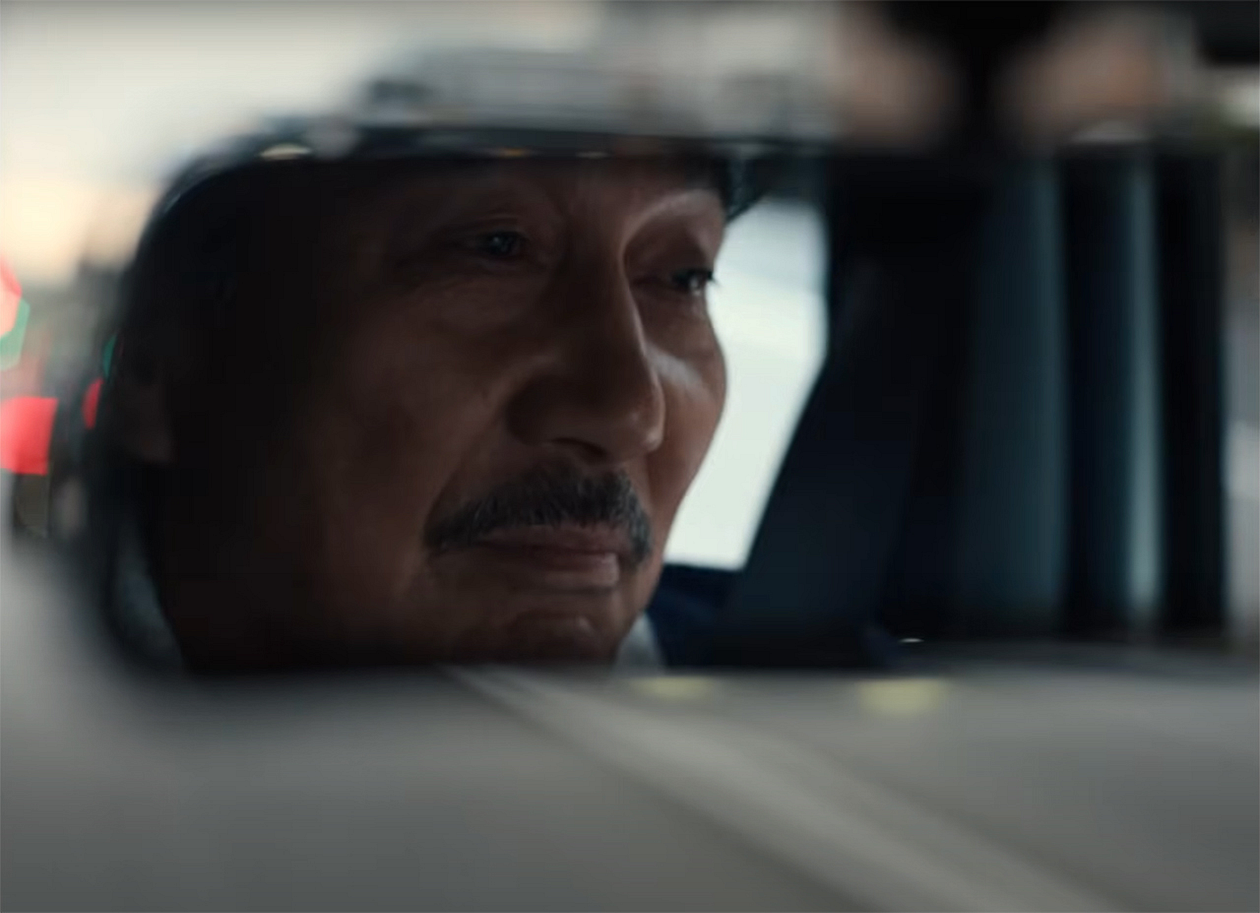
It’s a shame, then, that Perfect Days doesn’t offer enough of a roadmap out of Hirayama’s dilemma, concluding as it does with a noncommittal and — for want of a better word — cheesy finale that jars with what was up until then an elevated tonality. Crucially, this cancels any opportunity for viewers to witness Hirayama make the tangible changes in his life we ought to see him make — which, I think, has serious implications. By failing to provide a clearer resolution to Hirayama’s woes, the ending runs the risk of suggesting that, after all, Hirayama’s way of life wins out and the quiet, lonely life he leads can be celebrated in a way I think Wenders clearly tries to warn against.
This isn’t to say, however, that I will forget this film. On the contrary, I feel it is an apt contender in recent efforts lately to push back against our toxic way of life by shunning the digital age and reconnecting with the past. However, though at times deeply touching and inspiring (having watched the film I’m determined to finally get some film for my Pentax camera), I expected Perfect Days to offer a more concrete answer as to how we might realistically change our lives for the better. This, I feel we were owed. And without it, Perfect Days cannot be more than a love letter to a way of life at risk of becoming cliched.
This article was first published on Counter Arts on May 2, 2025
 Home
Home 
Leave a comment