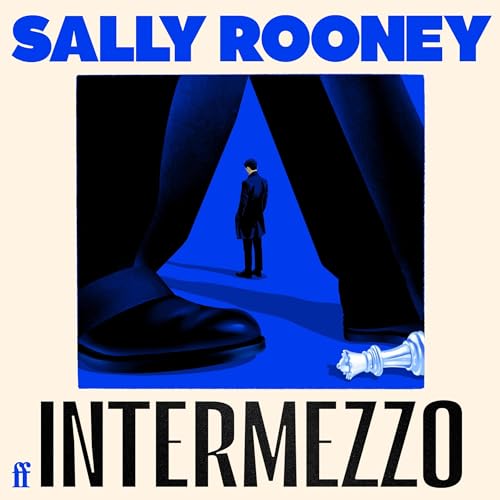
Rooney’s fourth novel is an insightful but strained, incessant exploration of millennial and gen Z relationships
Your enjoyment of Sally Rooney’s works in general will largely depend on your ability to tolerate only the most intellectually depressing of narratives. This, I confess, I found beyond endurance in Normal People, leading me to abandon the Irish author’s first book for good midway through. Rooney’s fourth novel, Intermezzo, is certainly no exception, though with enough perseverance on my part, and some degree of stylistic development on Rooney’s, I made it to the end (just about).
In typical Rooney fashion, Intermezzo is tethered by the umbilical cord of university, whose teachings haunt the book’s learned yet melancholic characters. As ever, this is a book written both about and for those thrust out into a cruelly capitalist world — sensitive, fragile beings burdened with a pressing awareness of the world’s injustices but possessing scant means of addressing them; the “normal people” of Rooney’s usual stock. Aptly, Intermezzo takes its title from a trick-manoeuvre used in chess, intermezzo, or Zwischenzug as it’s also known in German, a move intended to catch the opponent by surprise. Living life, Rooney suggests, is like playing a long, high-stakes game of chess with an invisible force — one that has dealt brothers Peter, 32, and Ivan, 22, one of the cruellest moves of all: the early death of a parent.
And yet, if life itself can be a game of chess, so can our relations with the people that populate it — our friends, family and acquaintances. For Peter and Ivan, the death of their father thrusts the two into closer orbit, bringing to a head a largely unspoken animosity shared between two strikingly different brothers, present ever since the advent of a tragedy in Peter’s youth that irrevocably changed their relationship.

We begin around 12 days after their father’s funeral. Peter, despite being a successful human rights lawyer and occasional lecturer based in Dublin, is a tortured soul who leads a life of erratic distraction — through drugs, alcohol and the undefined relationships he juggles with English lecturer and ex-girlfriend Sylvia, his age, and 23-year-old student Naomi. When Naomi isevicted for squatting, Peter invites her to live with him, adding to the financial support he already provides her. Ivan, meanwhile, is an autistic former chess prodigy, ambling from one cross-country chess competition to another, freelance, as he struggles to find formal work. During a tournament in rural Ireland, he meets and strikes up an unlikely relationship with Margaret, a 36-year-old programme director hosting the event at the arts centre where she works.
From the get-go, the brothers are presented as two players with starkly opposing approaches to the game of life. The book opens, in fact, with Peter’s acerbic recollection of the funeral, where he recalls with disdain the no-doubt second-hand suit his younger brother wore to his father’s funeral — which, like the braces he wears, make him a pitiful man-child suspended in arrested development. When we meet Ivan, however, we’re eventually made privy to his own funeral-related qualms — namely, his peevish anger at Peter’s default role as eulogist, a role Ivan assumes is naturally endowed upon him thanks to Peter’s older age, career status and philosophical education. His assumed professional and intellectual superior, Peter is the source of much frustration for Ivan. Match. Set. Game.
But despite their age gap, and any obvious advantage one brother might have over the other, we quickly gauge that Ivan and Peter are equal players. In fact, age relations serve to level the playing field — a distance they mutually maintain between themselves and which, perhaps, society imposes between young and old more generally (especially when the divide is gendered).
It’s here that a fraternal chiasmus — or reverse mirroring — presents itself, and forms the general outline of the book: paycheque-to-paycheque younger Ivan is taken in by the older, stabler Margaret (who mistakes him for a teenager); Peter, meanwhile, grieving his father and assuming the role of family head, manifests an outward need to control those around him through parenting the vulnerable but confident Naomi (thereby redeeming the feelings of guilt he harbours following Sylvia’s trauma). The brothers’ relationships, in other words, cancel out the age gaps found reflected in each.
Where they truly differ, Rooney suggests, is perspective, evidenced in the stylistic techniques used to distinguish the pair and develop the interior worlds of both brothers in interesting ways — hinting that Rooney is ready to move away from the rather fetishistic adoration of dysfunctional characters, the choose-your-favourite-character Skins quality of her previous works. Alternating from the perspectives of Peter and Ivan, the book flits between the extremely fraught prose used to narrate Peter’s troubled mind and life, and the more conventionally styled narration of Ivan (and, here and there, Margaret).
Through Peter, Rooney uses hyperactive, staccato prose to situate us firmly within Peter’s frenzied mind without any use of first-person writing. What results is something between first- and second-person narration in a Joyceian stream of consciousness. Peter’s mind is a rapid-fire, unending game of internalised chess, predominantly played out through interactions with, or his journey between seeing, both the women in his life: the unphased, aimless Naomi, seemingly content with the sadomasochistic sex she requests from Peter and the financial support her provides her (subbing the OnlyFans-style work she pursues alongside her studies); and the more mature, academically minded and successful Sylvia, victim of a traumatic incident left her unable have penetrative sex — and where, along with some form of remorse, his true feelings seem to lie.
Spending nights and evenings between each (a dynamic both women are aware of), Peter ever conjectures at his every next word, considering each move and the consequences they’ll inevitably bring whilst ever anticipating those of both Naomi and Sylvia. Conversations with both vary from caustic to heartwarming, lingering, more often than not, around the topic of sex and sexual dynamics.
Ivan, for his part, despite being more conventionally introverted, is less prone to internalising thoughts, hence why the prose used to narrate his chapters is stable, linear. Instead, as his new-found relationship with Maragaret develops and he travels to and from Dublin to meet her, Ivan blurts, falters, stumbles, ever apologising for the words that leave his mouth — a habit Margaret reciprocates, only with the grace her older years give her. Where dialogue between Peter and Naomi/Sylvie feels more high-stakes, conversations between Ivan and Margaret are naive, innocent-feeling, uttered like physical bumps into one another, each fearful of stepping on the others toes and making a fool of themself.
Intermezzo is, therefore, yet another book about conversations (with ourselves as much as with others), about how our words reflect deeply on us and irreparably affect the feelings of the people in our lives (or indeed might reflect, might affect). It is, perhaps, the sum total of characters’ internal and physical speech, in the same way a game of chess is made up of its players’ moves. This works where Peter and Ivan are concerned, as Rooney succeeds in believably constructing their lives for readers, even if it can feel claustrophobic.
Yet I find that Rooney’s male characters are generally more convincing, more fleshed out than her female counterparts, and Intermezzo is no different. Female characters — Margaret and Sylvia especially — lack the realness of their troubled counterparts and fail to serve much else than to soundboard the needs and desires of the men in their lives. They appear to have scant demands or desires to be heard in ways, I think, as humans, they perhaps realistically would — but are sufficiently outlined to merit, or rather need, fleshing out.
Significantly, any moments of complexity regarding female characters are reduced to matters of sex — ability, preference and style. True: patriarchal society very often reduces women in this way — that is, their sexual offering to men. But Intermezzo, dare I say it, fails to address and instead reinforces this dynamic — a fact scored by Rooney’s tendency to maintain female characters in a frustratingly holier-than-thou light. Women, in the book, especially Margaret, read like precious, ethereal beings that discuss Marx and drink rounds of lemonade at the pub and speak in bland, oddly ChatGPT-like dialogue (“Not at all, go on,” “Life can be sad,” “It’s no good pretending to be happy all the time” are but a few examples of the robotic filler her exchanges with Ivan are made up of). Ultimately, women in the book come across like variations of the ethereally perfect Marianne of Normal People.
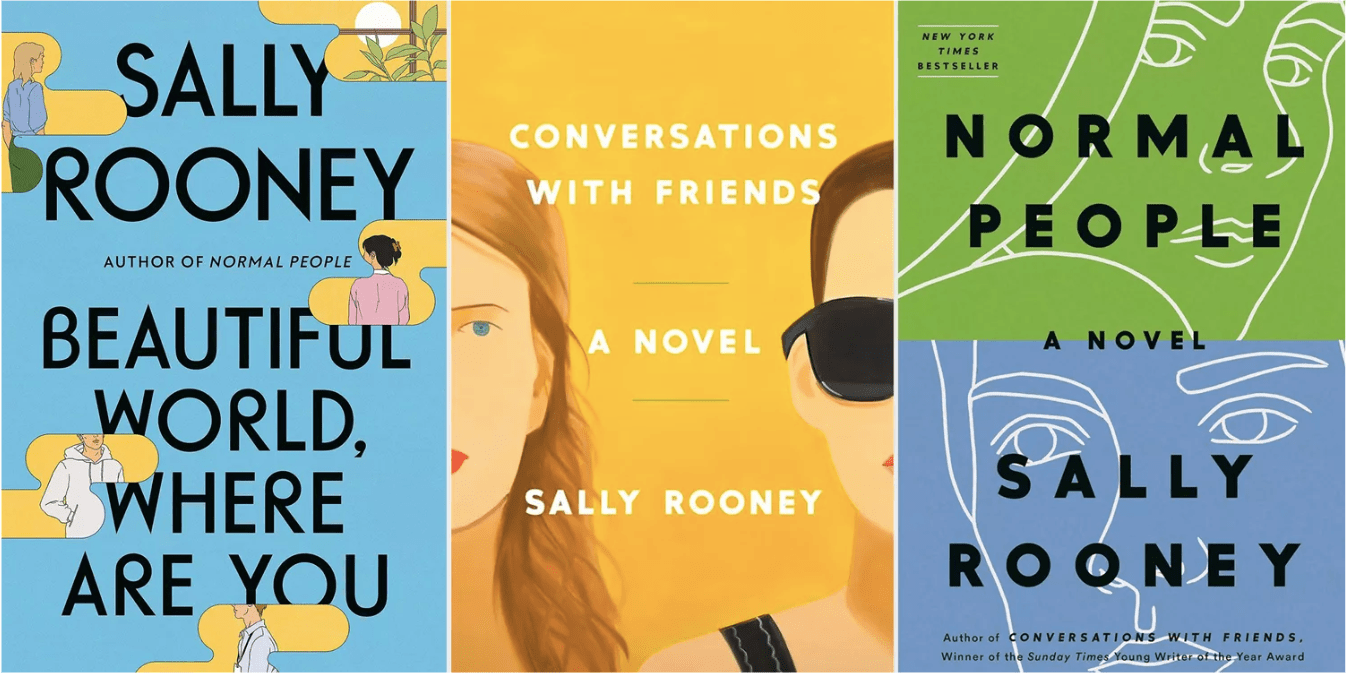
And like Normal People, characters in Intermezzo are the wrought products of their upbringings, educations and social lives, deeply shaped by cultural and capitalist influences. Reading Intermezzo can feel like a game of Who Am I, in which characters large and small are defined by the depth of their crop-top, the flavour of their vape, their choice of beverage, their job, their social manners and sexual preferences — to the point of self-effacement. As Peter himself observes, walking past an art college in Dublin, “students milling around in denim jackets, plastic boots, torn stockings. Formless teenage faces floating pale under the streetlight.” How we present to the world, in other words, tells the world who we are, becomes the focal point, with our faces being reduced to blank spaces.
This, again, can feel bleak, deeply pessimistic. But it has to be acknowledged here that Rooney addresses something so few authors dare to tackle head-on: the reality that modern life is a contradictory and image-obsessed world prone to reducing people — especially women — to their political and socio-economic status. Modern life is, on the one hand, seemingly liberated by the freedoms we’re coming to normalise — alternative careers, polyamory, open relationships, age-gap relations — but remains confined to the rigid grasp of neoliberalism — stratified wealth, rampant achievement culture, bleak job prospects — that make the person we present ourselves as matter deeply in the game of life. We’re in many ways so overwhelmingly free, yet so restricted by the prejudices and norms bound up with success, a tension waged out in the minds of Intermezzo’s intensely neurotic characters (particularly Peter’s). “[B]oth our lives involve some voluntary exposure to what other people might call defeat,” Peter tells Ivan over dinner in one of few instances the brothers meet in the book.
Navigating this tension is, of course, where Rooney excels thanks to her sharp, realistic eye that is often painfully on-point. But this is pulled down by a certain sanctimoniousness I find common across Rooney’s oeuvre, an artificially mournful aesthetic that tinges her characters and swamps the plot of Intermezzo itself — making its delineations feel faint, unconvincing, random. Intermezzo feels less invested in the themes of grief, sibling rivalry and age-gap relations than it does indulging in the psychological and ethical concerns surrounding them. I simply don’t buy the brothers’ warring divide (even if Rooney successfully depicts their starkly opposed lives). I’m likewise unable to gauge the sense that these brothers are grieving, that Peter is genuinely drug and alcohol-dependent, or that age-gap relations are a central focus in the novel; such elements are present in the book, but they feel like mere ingredients du jour blatantly added to a dish and not sufficiently folded in to form a cohesive, persuasive whole.
Despite genuine feats in style, in the end, Intermezzo is swallowed up by its own mood, preventing Rooney from offering up serious answers. And this is a shame, for there are moments of powerful insight to be found within the book which indeed keep the pages turning — less in relation to grief and relationships than what it is to exist as sensitive, feeling beings in an often cruel, judgemental world. Small moments of grit and humour would have helped elevate the relentless tone of intellectual melancholia, brightening the outlook of Rooney’s work to provide hope and whimsicality — things that can, and do, exist alongside the bad. Because finishing Intermezzo, I’m left less with a desire to “live,” as many were, than to question my every move.
This article was first published on Counter Arts on March 16, 2025
 Home
Home 
Leave a comment