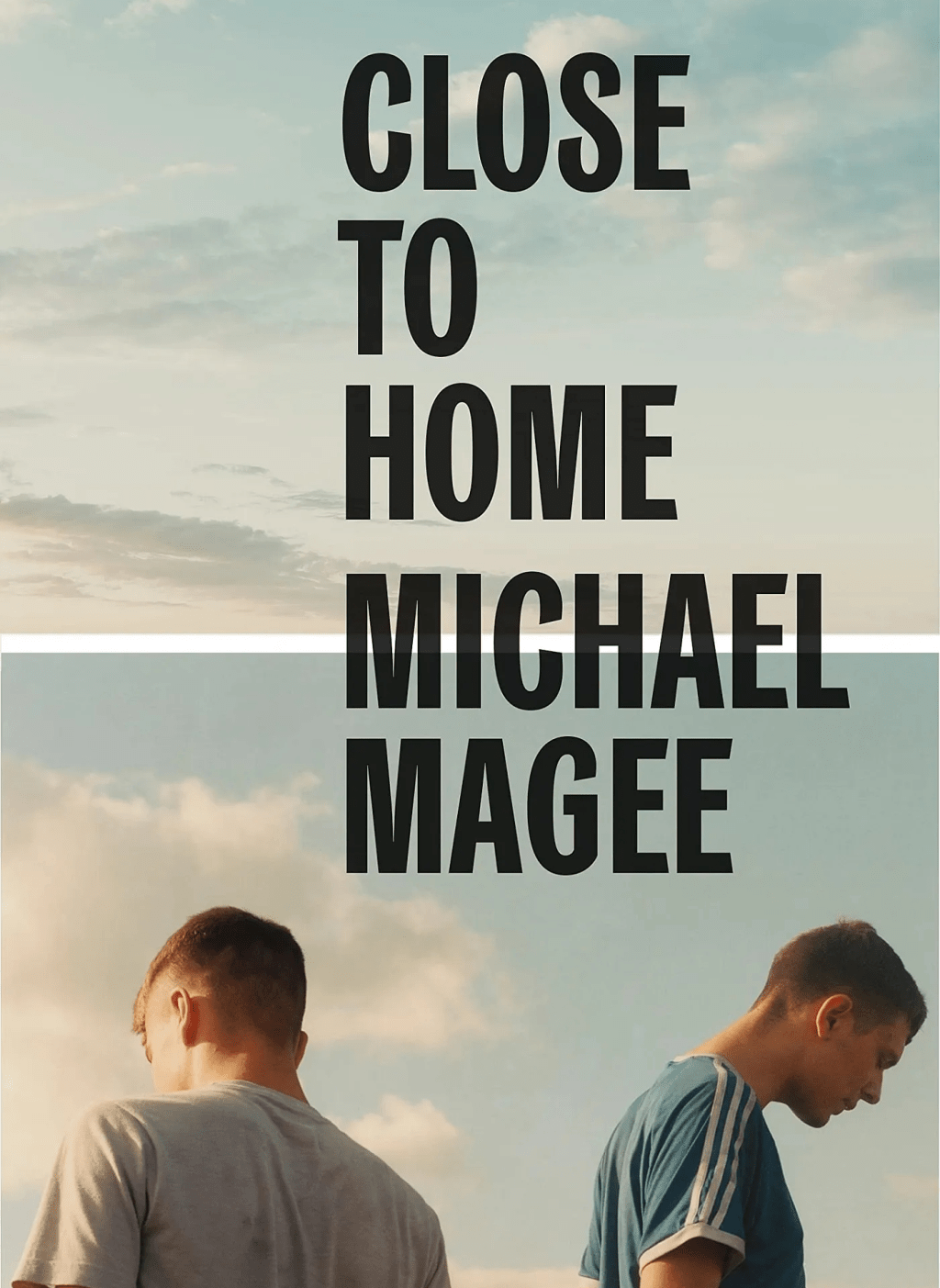
Michael Magee’s frank coming-of-age tale is a hopeful yet brutally realistic depiction of a conflicted and divided Belfast
Entrenched class tensions. Police — or “peeler” — and judiciary hostility. Wholly present memories of violent British occupation… Magee is lightning-quick to set the scene of his shining debut work, Close to Home, mapping out in the first few pages alone the many forms of conflict which define life in Northern Ireland.
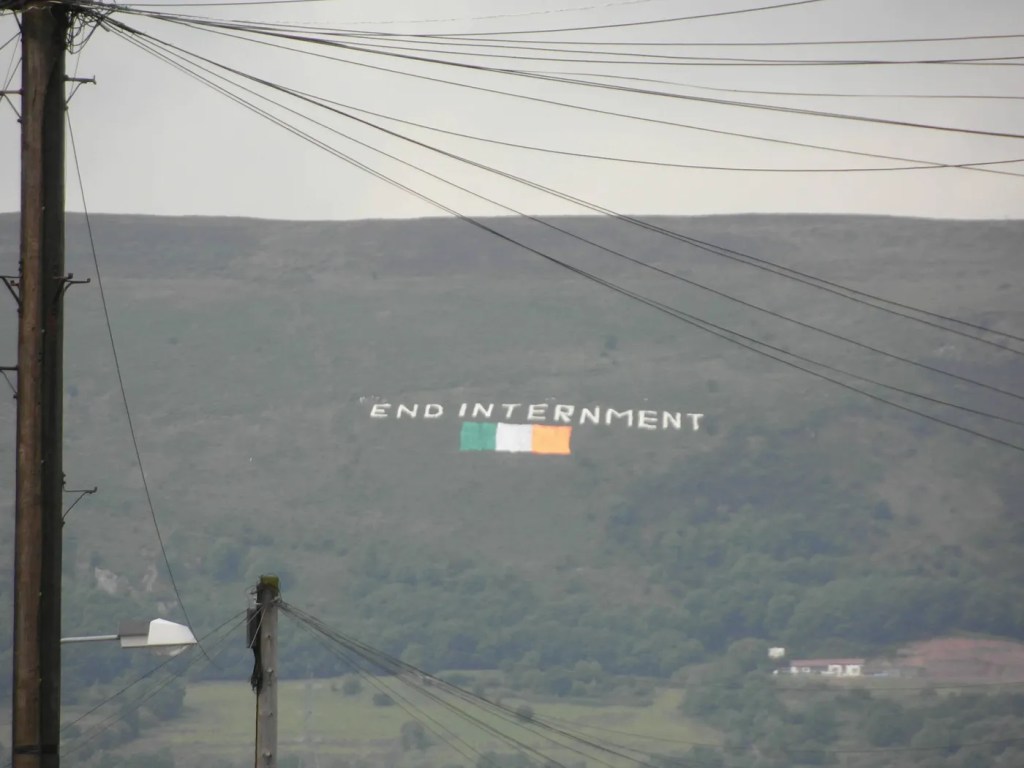
Recently returned from his degree in English from Liverpool University, Belfast-born Sean’s unhinged life comes to a head when, at a party in the “posh” side of town, he strikes a lad of his age but seemingly higher social class, putting him in hospital. Evoking the party-at-all-costs spirit of Welsh’s Trainspotting, a violent encounter isn’t enough to sour the night — even if Sean’s made aware by the police that they’ll be in touch. A creature of habit, Sean moves on to other cocaine-fuelled endeavours with his partner-in-crime and flatmate, Ryan. Waking up the next day to a sea of empty bottles and takeaway cartons, Sean glimpses, from his window, the latest political message left on the foothills of Black Mountain: “END INTERNMENT.” Written in giant letters visible to the West Belfast community, the words are a reference to the British brutality stemming from the 1970s, in which hundreds were arrested — and some even tortured — on suspicion of belonging to the IRA. In a deft cinematic parallel that hints at what’s to come, to appease their hungover state Sean and Ryan watch their favourite film, 1994’s prison drama classic, The Shawshank Redemption.
Like its protagonist, convicted banker Andry Dufresne, Sean is a gentle, empathetic man. His violent outburst is as an outer-bodied, uncharacteristic experience, the product of years of bottled-up shame, frustration and collective trauma. Yet his actions also echo the violence of an occupied Belfast and harsh modern world, one in which Sean struggles to find his way. Indeed, division and hostility are what define Sean’s everyday existence. Broken up by intervals of Minecrafting leftover drinks in pub beer gardens, his life is a precarious chain of insecure, zero-hour stints at one of Belfast’s many clubs, where belligerent managers and cocky customers have the final say, and drug-laced all-nighters in cusp-of-being-turfed-out-of, near-dilapidated accommodation. Forcing himself zombie-like from one thing to the next, Sean’s life is woven together grimly through interminable threads of cocaine, or “toot.” A saving grace, its numbing properties make coke a befitting choice of substance, one capable of cutting through and drowning out the conflict which follows Sean and his mates (an escape they’re frequently afforded thanks to crafty five-finger shenanigans at Asda’s checkout).
It’s only days later that the partying is interrupted in earnest when it’s revealed in court that Sean is sentenced to 200 hours of community service and a 600 pound fine — a fate we can’t help but welcome as relief from the endless and risky debauchery. But as life would have it, his community service coincides with a natural, long-time-coming desire to turn himself around once and for all and find stable work, no doubt influenced by the reappearance of Mairéad in his life.
A former childhood girlfriend, Mairéad is a testament to higher education’s perceived class-bending, straight-and-narrowing effects. A scrappy Belfast school survivor like himself, she reenters Sean’s life one late night/early morning a somewhat reformed, foreign-film-watching graduate with her eyes on Berlin’s creative scene, but who must for now put up with the degrading “shot-girl” work in clubs and monotonous retail work. As they share a takeout on the roadside, they fondly discuss the tribal tattoos and partisan ring-wearing that defined their youth. As they do so, we sense that Mairéad’s younger self lurks beneath the surface of her identity, ever waiting to remind Mairéad of her roots. Indeed, Sean himself struggles to reconcile the ingrained image of a pugnacious Mairéad throwing punches in brutal school-gates fights with the Doc Martin-wearing, well-spoken persona she conveys at the exhibitions he’ll attend, later in the book, under her wing. Their shared background, like their takeaway, unite the pair in an oddly paradoxical chiasmus, with Mairéad’s presence propelling Sean forward, and his own seeming to question the authenticity of Mairéad’s newfound identity.
Managing the thankless slog of job hunting with the gruelingly long hours of litter picking and grass strimming in the unforgiving Irish elements, we follow Sean as he reckons with the competing forces around him: his troubled immediate family, which, after being forced to move back home to live with his cash-strapped depressive mother, he yearns to leave and live independently and who, again paradoxically, view him as “Mr. University”; his derailing, drug-pushing mates, amongst whom his own disturbed brother, Anthony, ever ready with a fresh bag of coke to dangle in his face, is the unofficial ringleader and local big man; and the pressures posed by a determined Mairéad and the literary, often elitist world she introduces him to.
Sean’s struggle is distinctly uphill in nature, ever at the mercy of an exploitative class system that inevitably seeks to keep those with little at the bottom of the pile (“Don’t tell them you have a degree,” advises Mairéad after Sean struggles with job rejections). Magee captures this frustration, and the sheer alienation it creates. There’s a constant push and pull at work in Sean’s life, with those closest to him luring him back to his roots with booze, drugs and all-night benders, and those he regards as superior to him — the wealthier uni students and graduates he crosses paths with on the tiles — who, perceiving his background, seemingly shun him downwards. For Sean, this often culminates in a paranoid rage, as he oscillates dangerously between class-based shame and coke-fuelled desire to explode:
“I felt like I’d been doing this half my life. Padding myself full of vodka, tooting keys in cubicles, throwing it on to girls who looked at me like I was dirt, and rightly so. Moving out of the way of that fella with the flicked-up fringe before he barged into me… God I wanted to say something. I wanted to smash a bottle over his fucking head.”
Similarly, in a passage that neatly defines the feelings of alienation he feels taking stock of Mairéad’s social circle, Sean muses at an afters with her uni mates present:
“Who the fuck were these people? … They were [Mairéad’s] actual mates. People who had become part of her life, who had been there for her since she moved down to the Holylands all those years ago… Who brought her to the exhibition launches, and then back to house parties where they talked about politics and poetry and danced along to ‘Graceland’.”
In reality, Sean exists lodged uncomfortably between worlds. A hybrid of sorts, he is a juxtaposed amalgamation of the Trouble’s tainted, West Belfast boy he once was, and the well-read, gifted university-educated young man with vague literary aspirations he dreams of realising. Mirroring this is Magee’s writing. On the one hand markedly raw and conversation with a regular use of colloquialisms (“feg,” “aye,” “like,” “your man” pepper the pages), on the other, Magee’s prose is dashed with moments of poignant, beautiful insight (“I closed my eyes and listened to the breeze nudge the rubbish. When I opened them again, I could see Divis Tower, and behind it, the mountain like a cold shoulder against the sky”).
So replete with anxiety and paranoia about his place in the world, it’s as though Sean talks to us directly, pleads with us, yearns for us to be on his side. Reading like an intimate series of diary entries, Close to Home is a tale not just of personal redemption but of breaking free from the psychological prison of our own making — a habitually self-imposed chokehold that taints Sean’s perceptions of others and himself. Holding back no punches, Close to Home calls a spade a spade in the truest sense, eschewing the cliches typical of the coming-of-age canon. Indeed so raw, so real, we can practically smell the streets of Belfast. But nor is it an indulgently pessimistic portrayal of life. Instead, Magee artfully balances the gritty reality lived by many with tender, comical moments of hope, belonging and personal breakthroughs that make this book such a compelling and special read.
⋅ ⋅ ⋅
This article was first published in Counter Arts on 4 September 2024.
 Home
Home 
Leave a comment