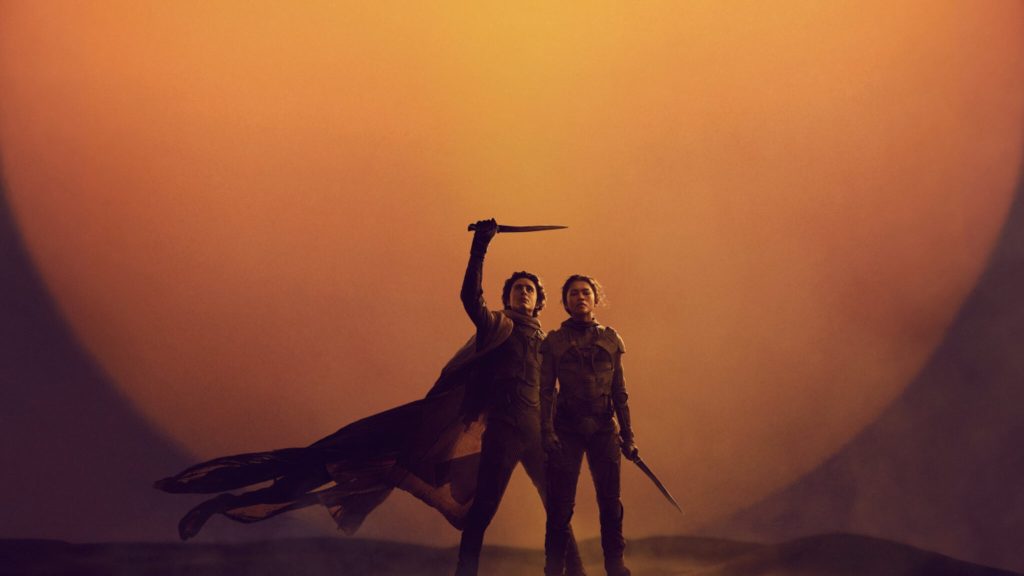
Denis Villeneuve continues to break boundaries in this stunning sequel
At two hours and 45 minutes, Villeneuve’s epic sequel — tipped to be one of the most successful since records began — is no walk in the park. With a sprawling, top-flight cast, thousands of pages of source material to grapple with, and a rich, complex universe of royal houses, peoples and religions, Dune: Part Two is an exemplar of narrative distillation. So much so that it’s difficult not to view the seismic omnipresence of the giant sandworms, great beasts of Arrakis only native Fremen can learn to ride and thereby tame, as a metaphor for the giant task that is translating a very literary, complex saga onto the big screen.
It’s a challenge perhaps only safe in the hands of master of visual suspense, Denis Villeneuve. From Sicario‘s (2015) droning cinematography and hypnotic visuals, to Arrival (2016), which bridges our world with extraterrestrial life with beguiling beauty while grappling with life on Earth, Villeneuve’s knack for refining morally complex, sweeping epics into visually striking blockbusters speaks for itself.
But it’s Villeneuve’s harsh, dystopian future-world of Blade Runner 2049 (2017), with its despotic, uncanny villains, which most aptly prefigures his turn at depicting the dry, hostile universe of Frank Herbert’s Dune series, set thousands of years in the future. Picking up from where we left off, we rejoin Paul Atreides, his now pregnant mother and “Bene Gesserit,” Jessica (Rebecca Ferguson), and Paul’s Fremen, once distrusting guide-cum-love interest, Chani (Zendaya). Continuing their fight to protect the desert planet of Arrakis — exploited by Great Houses for its native “spice,” a natural resource found on the surface of the desert with potent properties enabling intergalactic travel — Paul must win over the trust of the warring Fremen. Learning their language, their advanced ways of combat, and the crucial art of luring and riding a sandworm, Paul must defy the odds and the sceptics around him to become a true warrior — or Fedaykin fighter — worthy of the Fremen people.
By doing so, he will not just to become any old Fremen, however, but will (controversially) fulfil the written prophecy as the next leader of Arrakis, a destiny that is much contested within the fractured Fremen people, but extolled primarily by the Fremen “Sietch Tabr” leader Stiltgar (Javier Bardem). Himself dubious of his role as Messiah in waiting, while making leaps and bounds in his trials to become Fremen, will Paul give in to the hype and rule, inevitably assuming the role of the ruthless, tradition-breaking leader required to save Arrakis?
Weaved together with near-seamless editing and directing, Dune: Part Two defies the odds to become a show-stopping beauty. Yet what we as the audience see is the very varnished tip of a colossal iceberg. As the film progresses, leapfrogging from subplot to subplot, perspective to perspective, we’re kept firmly on our toes.
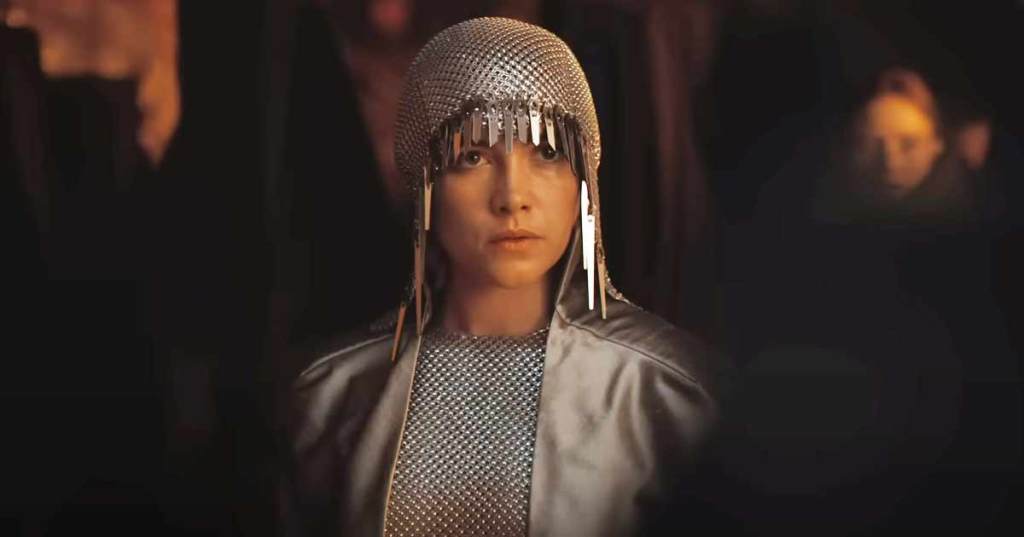
But despite lapses in detail, Dune: Part Two is anything but deliberately obfuscatory. Chez Dune, as critic Wendy Ide highlights, meaning is mediated through the film’s gorgeous, coded visuals. Dialogue, for the most part, is irrelevant (save the native Fremen tongue, Chakobsa, impressively adopted by many in the film). Thus while a warm, golden-hour sepia drapes the world of Arrakis, a stark chiaroscuro imbues scenes featuring the villainous Harkonnen clan. Moreover, awe-inspiring, eclectic costume is used to sartorially denote characters’ status and allegiance, spanning the neutral, canvassy athleticism of the Fremen; the gilded, sci-fi-rococo looks of House royalty (Florence Pugh’s Princess Irulan is Dune’s crowning jewel); the slick BDSM attire of the Harkonnen family; and, of course, the extravagant, gothic stylings of the Bene Gesserit Reverend Mothers, whose extended, veiled figures and draping fabrics reflect their wealth of inherited, impenetrable knowledge.
And this is to say nothing of Zimmer’s expansive and synaesthetic score, melding with what’s on screen. Waiting in the wings, ready to erupt with Fremen ferocity, it simmers, rattles, sighs and hums, conjuring the image of the shifting sands of Arrakis and the glimmering “spice” which skims its surface. At its larger, more epic capacity, it captures both the vast, dry beauty of Arrakis with haunting, Middle Eastern-inspired vocals from singer Loire Cotler, on the one hand, and the oppressive, “psychopathic” menace of the Harkonnen family with grungy electric guitars and impossibly low, bassy strings. It’s an epic score and a testament to Zimmer’s role as “Hollywood’s composer” — even if, admittedly, there’s the sense that the “borrowing” from Middle Eastern and Northern African cultures his score entails feels unacknowledged, plucked from a vague, Hollywoodised exotic.
Ultimately, your full enjoyment of Dune: Part Two will depend on your ability to remain with the narrative, not yielding to its powers of hypnosis as easily as Austin Butler’s Feyd-Rautha Harkonnen is seduced by the beautiful Bene Gesserit, Margot Fenrig (Léa Seydoux). It’s a scene so symbolic of Villeneuve’s aesthetic, and the film as a whole. In it, Zimmer bifurcates his score to personify the pair: hollow, sparse whipping sounds echo Fenrig’s mystical powers and near-ritualistic, gradual enchantment of the rising young Harkonnen, whose genetic makeup she is ordered to inspect via means of seduction; deep, angry droning sounds, meanwhile, at first untamed, cautious, mirror the lethal Feyd-Rautha, lured into his temptress’s bedroom. Sporadic beating sounds, mimicking the film’s iconic thumpers used to distract or lure sandworms in the desert, then appear. As Fenrig’s spell takes hold, the disparate sounds harmonise and a mesmeric melody takes flight. The Reverend Mother strikes again.
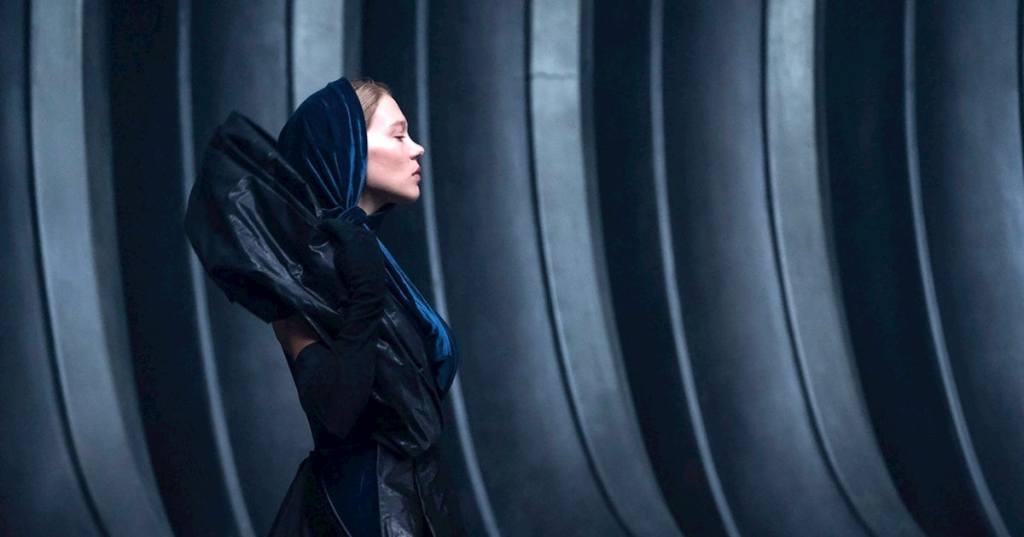
Bathed in a dramatic wash of black, space-grey and velvety blue tones, it is a picture-perfect dance of ensnarement. Yet, so provocative and unashamedly melodramatic, this especially memorable scene exposes the film’s self-awareness. Like Fenrig and her sisterhood of ghostly savants, Dune knows its power, is aware of its hold over a captive, bug-eyed audience.
Indeed so beautiful, so ethereal, it has to be said that like its predecessor, Dune: Part Two lacks a certain grounding, the everyday Shire familiarity of Peter Jackson’s unrivalled but comparable Lord of the Rings trilogy. It’s during such familiarisation that we come to know and like characters at a more relatable level, the dynamics they share with peers — the coterie, humour, even banter — adding light relief to the narrative. Then again, in the world of Dune, perhaps as with the film itself, it’s not so much a question of liking characters as it is admiring and giving in to their unattainable beauty and/or steely, monstrous charm.
As such, a sense of urgency reigns throughout Dune, echoing the severity of these troubled, drought-fearing times in which oil profits trump rampant, neo-colonial exploitation (the ruthless Harkonnen Baron sleeps in a well of oil-like substance, emerging from it to chastise those beneath him). But I’d remiss not to highlight that, bar the occasional smile between friends, Dune: Part Two is an exercise in looking extremely serious, often to its demise. Chalamet and Zendaya, film sweethearts, are the biggest offenders, apparent alone in the film’s ubiquitous advertising collateral. Look up in any busy town centre, and two dour souls — whose stern faces suggest a desperate need of some Metamucil — will meet your gaze.
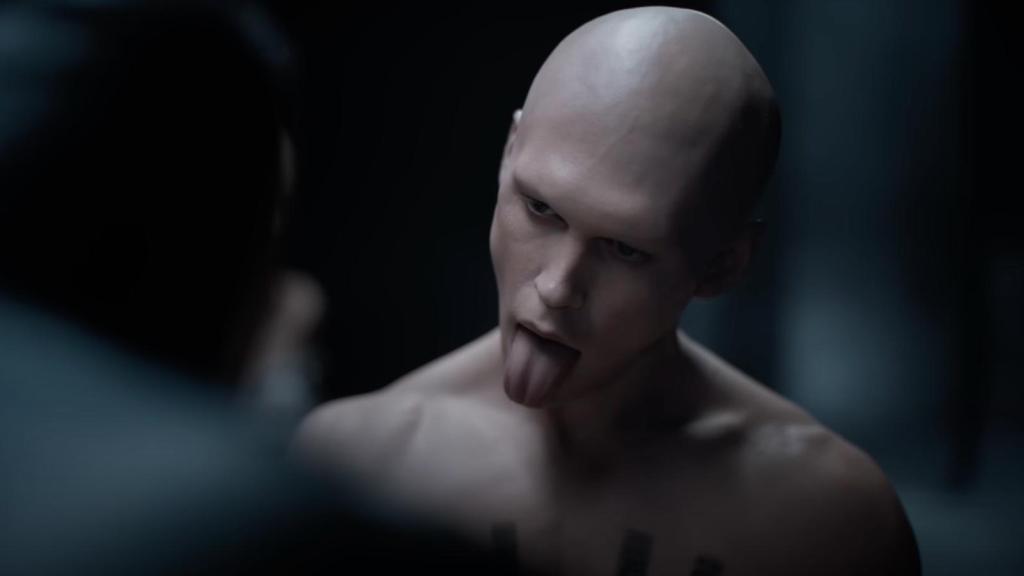
Doubtlessly, this stems from the difficult challenge of placing and maintaining the film’s key characters at the centre of a very crowded stage (at which it generally succeeds in doing). Nonetheless, Villeneuve’s second instalment remains a well-acted, stunning cinematic achievement. Punctuated with edge-of-your-seat, razor-sharp battle scenes and some first-rate villainy, momentum is, for the most part, maintained. This is thanks in no small part to Butler’s expert performance, who is phenomenally magnetic as the knife-licking psychopath with a stare that could turn you to stone. Treading the delicate line between darkly attractive and sadistically repulsive, his turn as the budding megalomaniac with a rapacious thirst for power make him a sturdy addition to the already chilling figure of Skarsgård’s Baron and his brutish clan.
Yet the rather teased presence of Hollywood heavy-weights Christopher Walken, Anna Taylor-Joy and Pugh, not wholly exploited throughout the film, serves as ample bate for more intrigue to come, with reports of Villeneuve having a new script in the works for a third instalment. Time will tell whether or not we’re willing to ascend Villeneuve’s dizzying heights a third time round and be seduced once more. But if the frenzy surrounding the sequel’s otherworldly, star-studded premier is anything to go by, it’s a safe bet we will. ∎
 Home
Home 
Leave a comment