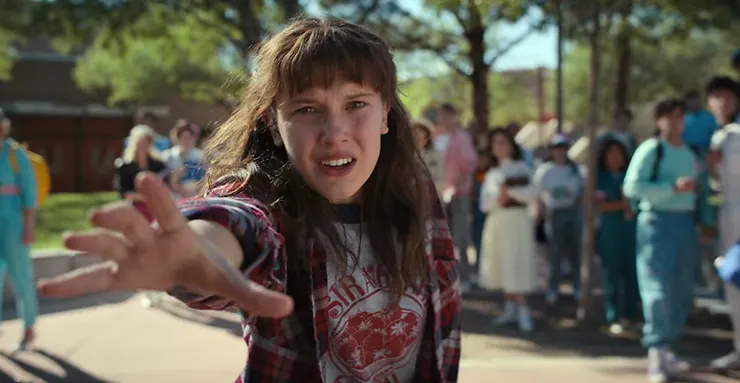
Netflix’s ballsy hit continues to bite off far more than it can chew, but this latest instalment dials back the nostalgia porn—for the better
In a memorable, love-it-or-hate-it moment of Stranger Things’ raucous third season, Dustin and sweetheart Suzie, communicating via radio for some reason I can’t quite recall or comprehend, together belt Lihmal’s hit theme to NeverEnding Story (an irony which speaks for itself, but never mind). Like most, I love a rom-com, and can appreciate rom-com elements fused with tension-laden action, sci-fi and horror, but Dustin and Suzie’s screeching duet embodies much of what Netflix’s genre- and time-bending nostalgia-fest has got wrong: gimmicky subplots and unrestrained nostalgia, topped off with panto-like, painfully unfunny moments which seem as though written by a high-school drama teacher.
Which is why, having finished ST’s epic fourth chapter, I’m shocked to admit that I’ve rather enjoyed this (mildly) toned-down instalment. Though uber-ambitious in scope, with perfectly cuttable subplots sprouting left right and centre, and despite a questionable, lukewarm conclusion, this round of ghoulish Hawkins shenanigans just about holds it all together, if manically, like a densely woven plait.
Much of this success can be attributed to significantly longer episode length, allowing for maximum action-packing and digestibility. Also working in the show’s favour, and more importantly, is the notable dialling down of ’80s gimmickry which plagued the previous two seasons and waylaid the more focused plot and character development of the first. Sure, when Eleven, Mike and Will head rollerskating at Rinkomania, Dead Or Alive’s You Spin Me Right Round plays; and of course, when town reprobate and eccentric outcast Eddie Munson (played excellently by British import Joseph Quinn) is presumed to be murdering the innocent children of Hawkins, Talking Head’s Psycho Killer plays. But, thankfully, we’re far from the unrestrained synth-bashing of the second and third seasons, and with it an indulgent reliance on garish, once ‘iconic’ set designs, geometric costume and sickly pastiches of ’80s cinema.
Equally refreshing is the much-needed revamp to the show’s sci-fi aesthetic, with the decision to introduce a haunted-house narrative marking a departure from the tired E.T./Back-to-the-Future styling. This move has naturally steered the show into mature, more enjoyable territory as the lovable Scooby gang set out to discover what demonic presence from the (now childishly named) ‘Upside Down’. What results is a Close Encounters-meets-IT the Clown fusion in which Russian forces—and the alien-like monsters synonymous with them—compete with seemingly benign government officials, whilst a curse-wielding, genuinely frightening witch-demon plucks off the younger, more psychologically vulnerable inhabitants of Hawkins in a much-done though perfectly entertaining metaphor for teenage angst and depression. As the two narratives play out, for the most part the show does a surprisingly good job of balancing them—even if the volume’s conclusion at best is a tenuous and far-fetched attempt at bridging the two worlds.
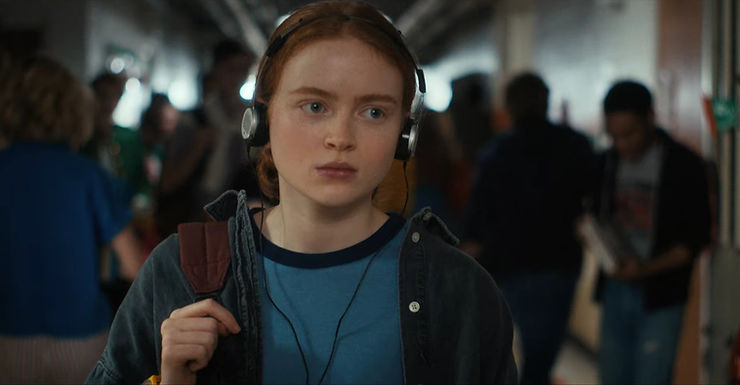
Benefiting from this shakeup and at the centre of this newly added horror strand is breakout star Sadie Sink with her layered portrayal of Max, the depressive, Kate Bush-listening teen still reeling from the death of her brother. Sink is this season’s protagonist in the ever-turning conveyor belt of teen characters the show churns up, and might just be the most interesting one yet. Borrowing from rivals like Riverdale and Dark, Max’s sombre, compelling characterisation makes for hugely entertaining viewing, while Sink’s performance stands out sharply against the more juvenile acting of her counterparts.
It’s only a pity that creators didn’t open up the floor for Max and stand-out characters like hers. For longer episode length, with so many narrative strands to accommodate for, simply cannot allow for genuine character development meaning that the show’s many would-be, potentially rewarding romances, coming-of-age arcs and queer explorations fail to go anywhere. This is Stranger Things after all, and true to form, season four is a busy, at times disorientating ride with too many characters. It’s true that the show would have benefited drastically from letting go of toxic Hopper, and with it the dead-in-the-water Russian subplot. But with the down-your-throat nostalgia significantly cut back, the series nonetheless feels more focused, and by being so, is more compelling—not to mention more on a par with its first, far subtler season.
Yet ultimately, the series is too far in the game now to turn back and truly emulate its short-lived heyday, those early days when character and plot trumped nostalgia-baiting and overstuffed plot-lines. Indeed, sucked into the Upside Down of Netflix’s hyper-streaming business model, Strangers Things is a multi-tentacled monster even the wisecracking, crafty Hawkins teens can’t defeat. But I’ll enjoy watching them try. ∎
 Home
Home 
Leave a comment